
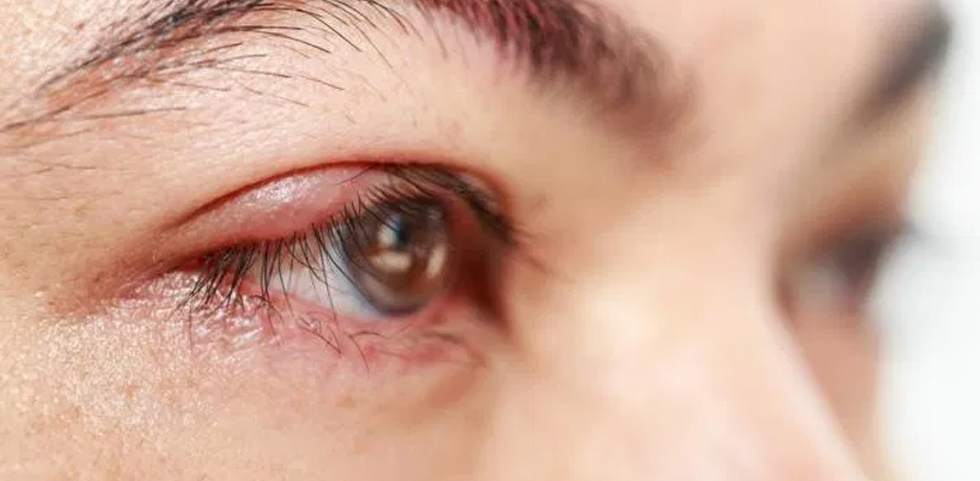
STYE
A stye is an inflammation of the eyelid associated with a small collection of pus. In most cases, the infection is caused by the Staphylococcus bacteria. It is sometimes known as a hordeolum. Although uncomfortable and incredibly common, styes are not generally a cause for concern. Often the lump is red and painful and looks like a boil or pimple. Although most styes form on the outside of the eyelid, some do develop on the inside. In the majority of cases, styes get better within 1 week without any medical intervention. External styes, or those outside the eyelid, may turn yellow and release pus. Internal styes that appear inside the eyelid tend to be more painful. Applying a warm compress gently against the stye helps it release pus more readily, and resolve the pain and swelling. Sometimes a stye can recur.
Fast facts on styes
Here are some key points about styes.
- Styes can be painful but often heal without medical intervention.
- If a stye persists for more than a week or affects vision, medical attention should be sought.
- Styes can be external or internal.
- Home remedies for styes include a warm compress and OTC pain medication.
- Most commonly, styes only affect one eye at a time.
- The patient will have a painful red swelling on the eyelid which can make the eye produce tears and become red. Sometimes styes can look like a pimple.
Styes very rarely affect both eyes simultaneously. An individual will generally have one stye in one eye. However, it is possible to have more than one stye in the same eye or one in each eye.
Symptoms of a stye can include:
- a lump on the eyelid
- swelling of the eyelid
- pain
- redness
- tenderness
- crusting of the margins of the eyelids
- burning sensation
- droopiness of the eyelid
- itching of the eye
- blurry vision
- discharge of mucus from the eye
- light sensitivity
- tearing
- discomfort when blinking
- the feeling that there is an object in the eye
The individual should speak to a doctor if the stye persists for greater than 1 week, vision problems arise, if the swelling becomes particularly painful, bleeds, or spreads to other parts of the face, or if the eyelid or eyes become red.
There are two general categories of stye:
External hordeolum
External styes emerge along the outer edge of the eyelid. They can become yellow, filled with pus, and painful when touched. They can be caused by an infection of the following:
- Eyelash follicle: The small holes in the skin from which eyelashes grow.
- Sebaceous (Zeis) gland: This gland is attached to the eyelash follicle and produces sebum. Sebum helps lubricate the eyelash and stop it from drying out.
- Apocrine (Moll) gland: This gland also helps prevent eyelashes from drying out. It is a sweat gland that empties into the eyelash follicle.
Internal hordeolum
The swelling develops inside the eyelid. Generally, an internal hordeolum is more painful than an external one. They are also referred to as an internal stye and are most commonly due to an infection in the meibomian gland. These glands are responsible for producing a secretion which makes up part of the film that covers the eye.
Patients may also experience a burning sensation in the eye, crusting of the eyelid margins, droopiness of the eyelids, itchiness on the eyeball, sensitivity to light, tearing, a feeling that something is stuck to the eye, and discomfort when blinking.
The following can increase the risk of developing a stye:
- using cosmetics after their use-by dates
- not removing eye makeup before going to bed
- not disinfecting contact lenses before putting them in
- changing contact lenses without washing hands thoroughly
- adolescents tend to have styes more commonly, but people of any age can develop them
- poor nutrition
- sleep deprivation
If a member of the household has a stye, the other residents should not share wash cloths or face towels to minimize cross infection.
Sometimes a sty occurs as a complication of blepharitis, an inflammation of the eyelids. Blepharitis is often caused by a bacterial infection, but can sometimes be a complication of rosacea, an inflammatory skin condition that mainly affects the skin of the face.
The following can increase the risk of developing a stye:
- A warm compress can be helpful in some cases of stye.
- Most styes go away on their own without the need for any treatment. As soon as they rupture, symptoms tend to improve rapidly.
- Do not try to burst a stye yourself.
- A warm compress held gently against the eye may help ease symptoms. The water should not be too hot. Special care should be taken when applying it to somebody else, such as a child.
- The compress should be held against the eye for 5 to 10 minutes, three or four times each day.
- Not only does the compress ease the discomfort, but it may also encourage the pus to drain away. Once the pus has drained away, symptoms normally improve rapidly.
- Pain relievers may be helpful if the stye is particularly sore. Some are available for purchase over the counter or online, such as ibuprofen or acetaminophen.
- When an external stye is extremely painful, the doctor may remove the eyelash nearest to it, and drain the pus away by lancing it with a thin needle. This procedure should only be carried out by a professional. If things do not improve, the patient may be referred to a specialist, for example, an ophthalmologist.
- If the stye persists, the doctor may prescribe a topical antibiotic cream or antibiotic eye drops. If the infection spreads beyond the eyelid, oral antibiotics might be prescribed.
- It is best not to apply eye makeup, lotions, or wear contact lenses until the stye has completely gone.